
Which job would be best?
Finding the perfect job can feel like searching for a hand in a haystack. But if you look hard enough, the proper role is somewhere.
The challenge is to figure out what that job is for you. Everyone’s different, so there’s no one-size-fits-all answer. However, by breaking the process into manageable steps, you can discover what lies behind what fits your passions, skills and financial requirements.
This guide will unpack the key elements of finding your ideal job, avoiding common traps and pitfalls, and strategies based on reality for finding your life purpose. So, without further ado, let’s get started.
The Three Key Factors for the Perfect Job

When searching for the perfect job, focus on three critical factors:
- Enjoyment: Find something you genuinely love to do.
- Skill: It should be something you’re good at.
- Earning Potential: It needs to provide financial stability.
The perfect position is the balance of all three. It may be possible to enjoy something you’re skilled at that you cannot earn from, or enjoy something lucrative that you’re not skilled in at all, but the ideal is finding that sweet spot where all three intersect.
For example:
- You could be passionate about painting and very skilled at it, but you may not earn a living at it.
- You may enjoy sales and make good money, but you don’t feel talented at it.
- You may be good at accounting and making a decent wage, but the work is not satisfying.
In order to hit that target, look for a role that strikes the right balance between all three. And the thing is, enjoyment usually leads to development of skill, and skill can lead to earning potential. But the hardest part is figuring out what you really like.
Be Cautious About Turning Hobbies into Careers
That’s a dream for many, wanting to turn their hobbies into careers. Because at the end of the day, who doesn’t want to be paid for doing what they love? But that approach entails risks.
For example:
- Music: You may enjoy making music, but the industry is very competitive and it can be difficult to have a stable income.
- Travel: Traveling the world may be an exciting thing, but doing it as a career (e.g., a travel blogger, or tour guide) may leave one in a state burnout or in a precarious financial state.
- Sports: Playing tennis for fun with friends is a far cry from the pressure of competitive sports.
The risk is that a hobby becomes a job, and all of the joy that it provided gets taken away. For example, let’s say you have a passion for playing music but are forced to repeat many same songs, you may grow to resent it. In the same vein, if you love to cook as a hobby, working long hours in a high-pressure kitchen may lose its luster for you.
Life Purpose and the Concept of Ikigai
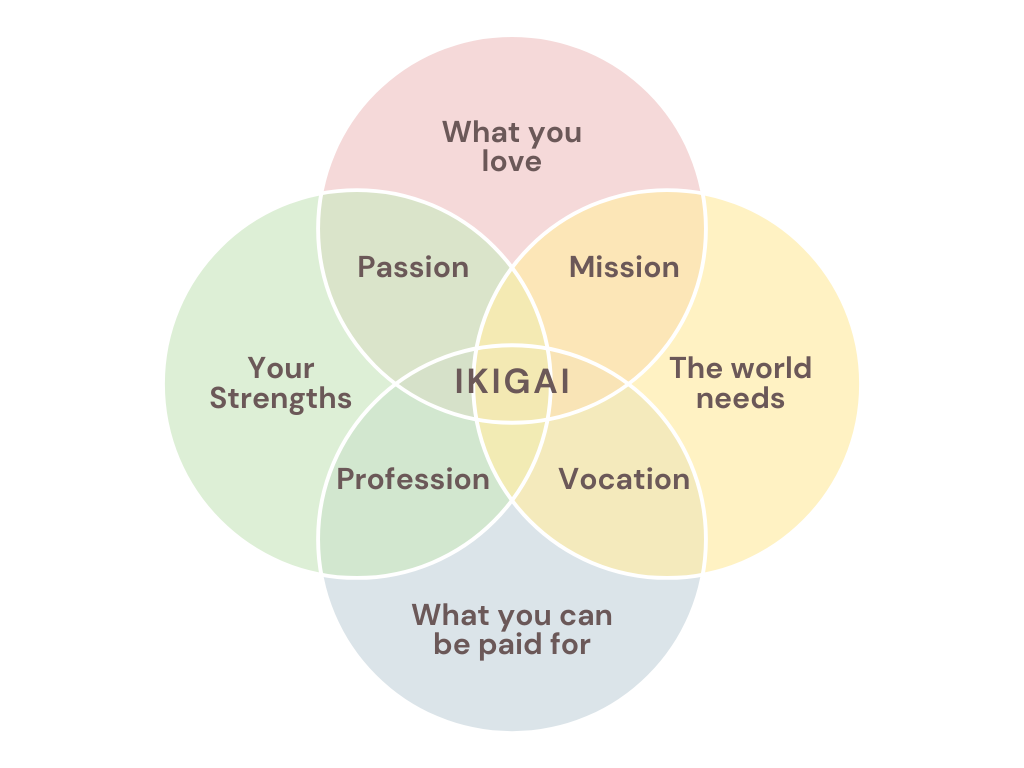
In addition to enjoyment, skill and earning potential, think about your life purpose. It adds a new fourth dimension: making a difference.
The Japanese concept of ikigai — your reason for being — combines four things:
- What you love?
- What you’re good at?
- What the world needs?
- What you can be paid for?
Not all four elements are required, but the closer you can get them aligned, the fuller your life purpose.
For example:
You might love teaching, and be good at it, but if you can’t make a meaningful living, it may not be sustainable.
You may enjoy volunteering and contribute positively, but if it doesn’t come with pay, it is unlikely to be your main profession.
The idea is to discover a position that satisfies as many of these circles as possible. When something is a responsibility and/or you are skilled at it and are having an impact and getting paid for it, even if you don’t like it, it can still feel like a duty. But add enjoyment and you’ve truly found your life purpose.
How to Discover Your Life Purpose

Finding your purpose in life is a process, not an end point. Here are six ways to help you find it:
Reflect on Childhood Passions
What were you passionate about as a kid? More often, our early passions indicate our natural gifts. If, for example, you found that you loved planning events or helping people, these types of tendencies might indicate a path in project management or social work.
Uncover Your Gifts
Test romantic chess that will offer hidden talents. Jazz musician Charlie Mingus, for instance, wrestled with the trumpet and drums before discovering his destiny with the double bass. In fact, discovering skills you are not aware of is one of the biggest benefits of trying out new things.
Persevere Through Challenges
You don’t like it until you’re good at it. Learning a musical instrument or a sport can be initially frustrating, for example, but often has a sense of joy associated with mastery.
Improve Your Skills in Areas You Love
If you’re unskilled at something you love, spend time sharpening your skills. If you love writing but don’t feel confident, take a class, practice regularly.
Meditate and Reflect
Spend time in still, quiet reflection, which will help you crystallize your vision. Just by asking yourself, What is my life purpose? during meditation is a great way to have your mind opened to new possibilities.
Explore Unfulfilled Parental Aspirations
Your calling is sometimes what your parents wanted to be but never became. And if your parents had aspirations as teachers or performers, you may find satisfaction as one of the two.
Talk to People and Learn from Their Experiences
The best way to find out what your perfect job is, is to talk to others. Here’s how:
Seek Feedback: Others may spot strengths you miss. For instance, a friend might say you’d be a great teacher or a nurse.
Discover through Others’ Work: Find out what people do for a living to expose new avenues. You might find that you learn that being a vet isn’t just working with animals.
Find Mentors: Seek guidance from those in roles you admire.
Shadow or Intern: Gain firsthand experience in different fields.
Reach Out to Recruiters: A recruiter might help you find a good fit between your skills and personality and a specific role.
What If You Can’t Get Your Dream Job?
If your ideal job feels out of reach, consider alternatives. For example:
- If you’re not able to work for NASA, consider similar areas like scientific research.
- You can also work for a horse charity if you love horses, but can’t be a vet.
Sometimes, a similar role may be equally satisfying.
Final Thoughts
Self-awareness, exploration, and persistence are key to finding the right job. Consider what you love, what you are good at, and what the world needs. Consult with others, try things out, and don’t hesitate to change decision if something isn’t going well. Your perfect job — and your reason to be alive on this planet — is out there.